Breadman offers convenient home baking with models like the TR2500BC and BK2000BQ, supported by extensive online resources and recipe guides.
Manuals, available through the Internet Archive and Breadman’s website, detail initial setup, cycles, and troubleshooting for optimal results.
The Ultimate Plus requires a “burn off” cycle to eliminate manufacturing oils, ensuring fresh, flavorful loaves from your new appliance.
What is a Breadman Bread Machine?
Breadman bread machines are automatic appliances designed to simplify the bread-making process at home. These machines, exemplified by models like the TR2500BC and BK2000BQ, handle kneading, proofing, and baking – all within a single unit.
According to available manuals and resources from Breadman’s official website and the Internet Archive, these machines aim to “bring home the bakery.” They offer pre-programmed cycles for various bread types, from basic white bread to whole wheat and sweet doughs.
Initial use often involves a “burn off” cycle to eliminate manufacturing oils, ensuring the first loaf is pure and flavorful. Breadman provides comprehensive instruction manuals and recipe guides to assist users.
Benefits of Using a Breadman Bread Machine
Breadman bread machines offer convenience and control over ingredients, allowing bakers to avoid preservatives and additives found in store-bought bread. Manuals highlight the ease of use, with pre-programmed cycles for diverse bread types, simplifying the baking process.
Resources like those found on Breadman’s website and the Internet Archive demonstrate the machines’ versatility – from basic loaves to dough for rolls and pizza. The “burn off” cycle ensures a fresh start, while recipe guides inspire experimentation.
Ultimately, a Breadman machine delivers fresh, homemade bread with minimal effort, promoting a healthier and more satisfying baking experience.
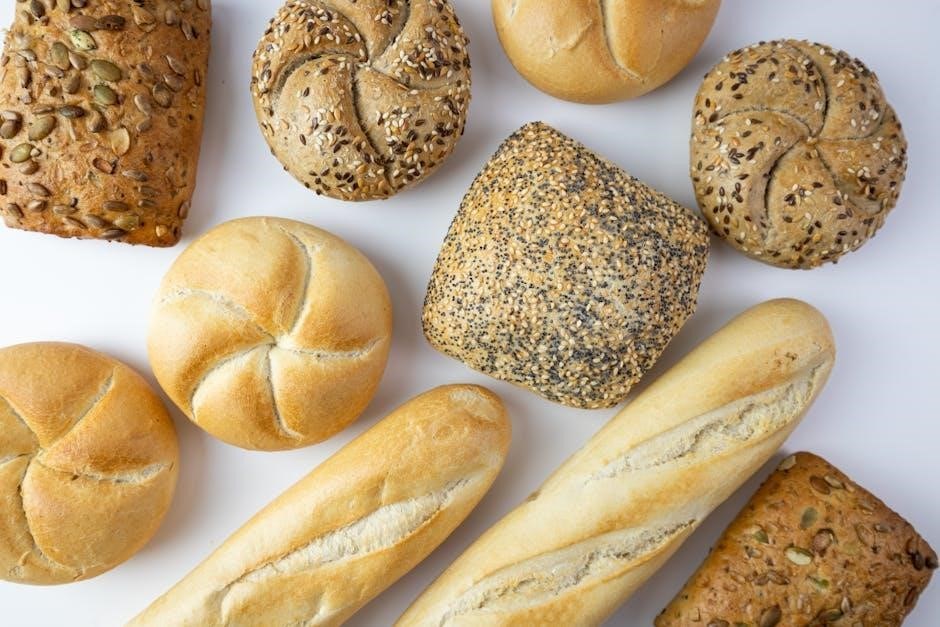
Understanding Your Breadman Model
Breadman machines come in various models like TR2500BC, TR2200C, and BK2000BQ; manuals detail each model’s specific components and control panel functions.
Refer to your machine’s guide for accurate identification and operation.
Identifying Your Specific Breadman Model (TR2500BC, TR2200C, BK2000BQ etc.)
Determining your exact Breadman model – whether it’s a TR2500BC, TR2200C, BK2000BQ, or another variation – is crucial for accessing the correct instruction manual and recipes.
Locate the model number typically found on a sticker on the bottom or back of the machine.
This number is essential when searching for downloadable manuals on the Breadman website (www.breadman.com) or resources like the Internet Archive.
Using the correct manual ensures you understand your machine’s specific features and cycles.
Key Components of the Breadman Bread Machine
Essential components include the bread pan, which holds ingredients during baking, and the kneading paddle, responsible for mixing and developing the dough’s gluten structure.
The heating element ensures even baking, while the control panel allows cycle selection and customization.
A viewing window, present on some models, lets you monitor the baking process without interrupting it.
Understanding each part, as detailed in your model’s manual, is vital for proper operation and maintenance.
Control Panel Overview & Functions
The Breadman control panel features buttons for cycle selection – White, Rapid, Whole Wheat, and Sweet, among others – allowing tailored baking.
Settings for crust color (light, medium, dark) and loaf size (1lb, 1.5lb, 2lb) provide customization.
A start/stop button initiates and pauses the baking process, while a delay timer enables pre-programmed baking.
Refer to your specific model’s manual for detailed explanations of each function and optimal settings for various recipes.
Getting Started: Initial Setup
Before first use, the Breadman manual recommends a “burn off” cycle, utilizing the Rapid White cycle, to eliminate any residual manufacturing oils.
Carefully assemble components and understand the ingredient pan and paddle functions for successful bread making.
First-Time Use: Burning Off Manufacturing Oils
The Breadman instruction manual explicitly details the importance of a first-time “burn off” cycle. This crucial step eliminates any lingering manufacturing oils present within the machine after production.
Utilize the Rapid White cycle program for this initial burn-off process; no ingredients are needed.
This ensures your first loaf isn’t tainted with unwanted flavors and guarantees a clean, fresh baking experience.
Following these instructions safeguards the quality of your baked goods and prepares your Breadman for consistent performance;
Assembling the Bread Machine Components
Before your first bake, ensure all Breadman components are correctly assembled. This typically involves securely placing the bread pan within the machine’s housing.
Next, carefully insert the kneading paddle into the designated shaft inside the bread pan, ensuring a snug fit.
Double-check that the pan is properly seated and the paddle is firmly attached to guarantee effective kneading during the baking cycle.
Refer to your model’s manual (like the TR2500BC or BK2000BQ) for specific diagrams and guidance.
Understanding the Ingredient Pan and Paddle
The Breadman ingredient pan securely holds your dough during mixing and baking. It’s designed for even heat distribution, crucial for consistent results.
The kneading paddle, inserted into the pan, mimics hand-kneading, developing gluten for a perfect texture.
Ensure the paddle is firmly attached before each cycle; a loose paddle can lead to uneven mixing.
Refer to your model’s manual (TR2500BC, BK2000BQ) for specific pan and paddle details, and cleaning instructions.
Basic Bread Making: The White Bread Cycle
The “White” cycle is ideal for beginners, offering a simple path to homemade bread. Breadman manuals provide specific ingredient lists and step-by-step instructions.
Follow the recipe guide closely for best results, ensuring proper ingredient order and amounts.
Ingredients for Basic White Bread
For a classic loaf, you’ll typically need 1 ¼ cups of warm water (around 105-115°F), 3 cups of bread flour, 2 tablespoons of granulated sugar, 1 ½ teaspoons of salt, and 2 ¼ teaspoons of active dry or instant yeast.
Breadman recipe guides often specify precise measurements for optimal results, emphasizing the importance of accurate ingredient ratios.
Some recipes may include 2 tablespoons of softened butter or oil for added richness and a softer crumb, enhancing the final texture of your homemade bread.
Step-by-Step Instructions for the White Bread Cycle
First, add wet ingredients (water, oil/butter) to the bread pan, followed by dry ingredients (flour, sugar, salt, yeast), ensuring yeast doesn’t directly contact liquid.
Select the “White Bread” cycle on your Breadman machine, choosing the desired loaf size (1.5lb, 2lb, etc.). Press start to begin the kneading, rising, and baking process.
Monitor the dough during the initial kneading stages; adjust liquid or flour if needed for proper consistency, referencing your machine’s manual for guidance.
Troubleshooting Common Issues with White Bread
If your bread doesn’t rise, check yeast freshness and proper activation; ensure liquid temperature is within the recommended range (typically 105-115°F).
For a collapsed loaf, reduce yeast quantity or liquid amount in subsequent attempts, and avoid opening the lid during baking.
If the paddle remains stuck, ensure sufficient liquid is used and ingredients are added in the correct order, as outlined in the Breadman manual.
Exploring Different Bread Cycles
Breadman machines feature cycles like Rapid Bake, Whole Wheat, and Sweet Bread, each optimized for specific dough types and baking requirements.
Refer to your model’s manual (TR2200C, BK2000BQ) for cycle-specific ingredient adjustments and baking times for best results.
Rapid Bake Cycle: For Faster Bread Making
The Rapid Bake cycle on your Breadman machine significantly reduces baking time, ideal for when you need fresh bread quickly. Manuals indicate this cycle is designed for simpler loaves, often utilizing a quicker rise and bake process.
However, be aware that the resulting bread may have a slightly different texture compared to breads made using standard cycles. Refer to your specific model’s recipe guide (BK2000BQ, TR2500BC) for recommended ingredient amounts and adjustments when utilizing this expedited baking option.
It’s crucial to follow the manual’s guidance to ensure a successful and tasty outcome with the Rapid Bake cycle.
Whole Wheat Cycle: For Nutritious Whole Wheat Bread
The Whole Wheat cycle on your Breadman machine is specifically calibrated for the unique properties of whole wheat flour, ensuring optimal rise and texture. Manuals emphasize the importance of using bread machine yeast and adjusting liquid levels, as whole wheat absorbs more moisture.
Recipe guides, like those for the BK2000BQ and TR2500BC, provide tailored ingredient ratios for this cycle. Expect a slightly denser loaf compared to white bread, but rich in fiber and nutrients.
Always consult your machine’s manual for specific instructions and recommended recipes.
Sweet Bread Cycle: For Enriched Doughs
The Sweet Bread cycle, detailed in Breadman manuals, is designed for recipes containing higher sugar and fat content, like brioche or cinnamon swirl bread. This cycle features a slower rise and longer kneading time to properly develop the enriched dough.
Recipe guides for models like the TR2200C and BK2000BQ offer specific ingredient proportions for optimal results. Be mindful of ingredient order, as suggested by the manual, to prevent issues.
Always monitor the dough’s consistency during mixing.
Ingredient Considerations & Ratios
Breadman manuals emphasize using bread flour for structure, while all-purpose flour yields a softer loaf. Yeast type—active dry or instant—impacts rise time and flavor.
Precise liquid ratios, detailed in recipe guides, are crucial for proper dough consistency.
Flour Types: Bread Flour vs. All-Purpose Flour
Breadman bread machine manuals frequently address the importance of flour selection for optimal results. Bread flour, with its higher protein content, develops more gluten, creating a stronger structure ideal for loaves that need to rise significantly and maintain their shape during baking.
Conversely, all-purpose flour contains less protein, resulting in a softer, more tender crumb. While suitable for some recipes, it may not provide the necessary support for taller loaves or those with heavier additions like fruits or nuts.
Experimentation is encouraged, but understanding these differences, as outlined in Breadman resources, is key to achieving desired textures.
Yeast: Active Dry vs. Instant Yeast
Breadman bread machine manuals detail proper yeast usage for successful baking; Active dry yeast requires proofing – dissolving in warm water with a bit of sugar – to ensure viability before adding to ingredients. This step confirms the yeast is alive and active.
Instant yeast, also known as bread machine yeast, can be added directly to the dry ingredients, streamlining the process. However, always check your Breadman manual for specific recommendations regarding quantities and usage.
Using the correct type and amount of yeast is crucial for proper rising and loaf texture.
Liquid Ratios and Adjustments
Breadman bread machine recipes rely on precise liquid-to-dry ingredient ratios for optimal dough consistency. Manuals emphasize that humidity and flour type can necessitate adjustments. Too much liquid results in sticky dough, potentially causing collapse, while too little yields a dry, dense loaf.
Start with the recipe’s recommended amount, then observe the dough during kneading. Add liquid, one tablespoon at a time, if it appears too dry, or flour if overly wet.
Consistent measurements are key to repeatable baking success.
Advanced Techniques & Recipes
Breadman machines excel beyond basic loaves; explore adding fruits, nuts, or seeds for customized flavors. Utilize the dough cycle for rolls and pizza, expanding culinary possibilities.
Adding Fruits, Nuts, and Seeds
Enhance your Breadman creations by incorporating fruits, nuts, and seeds, but timing is crucial. Generally, add these ingredients during the second knead cycle, signaled by the machine beeping.
This prevents them from becoming overly processed or sinking to the bottom of the loaf. Dried fruits, like raisins or cranberries, add sweetness and texture.
Nuts, such as walnuts or pecans, provide a delightful crunch. Seeds, like sunflower or flax, contribute nutritional value and subtle flavor.
Avoid overloading the pan, as this can hinder the rising process and affect the final texture of your bread.
Making Dough Only: For Rolls and Pizza
The Breadman machine isn’t limited to loaves; utilize the “Dough” cycle for versatile baking! Select this cycle, and the machine will complete kneading and the first rise, stopping before the baking phase.
This perfectly prepared dough is then ready for shaping into rolls, pizza crusts, or other favorite creations. Gently remove the dough from the pan after the cycle completes.
Remember to punch down the dough to release air before shaping. Adjust baking times and temperatures according to your specific roll or pizza recipe for optimal results.
Gluten-Free Bread Making with Breadman
Breadman machines can tackle gluten-free baking, though results differ from traditional bread. Specialized gluten-free flour blends are crucial, often requiring xanthan gum for structure.
Consult recipes specifically designed for bread machines and gluten-free flours, as ingredient ratios and cycle selections are vital. The machine may require a slightly longer kneading time.
Expect a denser loaf compared to wheat bread; gluten-free dough lacks the same elasticity. Experiment with different blends and cycles to achieve your desired texture and taste.
Cleaning and Maintenance
Regularly clean the bread pan and paddle after each use to prevent residue buildup. Wipe the machine’s housing with a damp cloth for longevity.
Proper storage ensures your Breadman remains in optimal condition for years of delicious homemade bread.
Cleaning the Bread Pan and Paddle
After each baking cycle, promptly remove the bread pan and paddle from the Breadman machine. Allow both components to cool completely before handling to avoid burns.
Wash the bread pan and paddle with warm, soapy water. Avoid using abrasive cleaners or scouring pads, as these can damage the non-stick coating.
Ensure all traces of dough and residue are removed. A soft brush can be helpful for reaching tight corners. Thoroughly rinse and dry both components before reassembling.
Some models may have dishwasher-safe pans and paddles; consult your specific Breadman manual for confirmation.
Cleaning the Bread Machine Housing
To maintain your Breadman bread machine, regularly clean the exterior housing. Always unplug the appliance and allow it to cool completely before cleaning.
Wipe down the housing with a damp, soft cloth. Avoid getting water inside the machine, especially near the control panel and electrical components.
For stubborn stains, use a mild detergent solution, but ensure no residue remains. Dry the housing thoroughly with a clean cloth after wiping.
Never immerse the bread machine in water or any other liquid. This could cause electrical shock or damage the appliance.
Proper Storage of Your Bread Machine
When not in use, store your Breadman bread machine in a cool, dry place, away from direct sunlight and extreme temperatures. Ensure the appliance is completely clean and dry before storing.
Avoid storing the machine in a damp environment, as this can lead to corrosion or electrical issues. Keep the original packaging if possible, for protection during storage.
Do not wrap the power cord tightly around the machine, as this could damage the cord over time. Store it loosely or separately.
Regular checks during storage can help maintain the machine’s longevity and ensure it’s ready for your next baking adventure.

Troubleshooting Common Problems
Breadman manuals address issues like dough not rising or collapsing, and paddle malfunctions. Online resources and guides offer solutions for common baking challenges.
Refer to your model’s specific instructions for error code resolutions and optimal performance.
Bread Not Rising
If your bread isn’t rising, consult the Breadman manual for troubleshooting steps; Ensure the yeast is fresh and properly activated; expired or inactive yeast won’t provide the necessary lift.
Check liquid temperatures – too hot or cold can kill the yeast. Verify ingredient measurements are accurate, as imbalances can hinder rising.
Also, confirm the machine’s lid is securely closed during the cycle, and the heating element is functioning correctly. Ambient temperature can also affect the process, so a warmer environment may help.
Bread Collapsing
If your Breadman loaf collapses, the manual suggests checking for excessive liquid. Too much moisture weakens the gluten structure, leading to a sunken center. Conversely, insufficient flour can also cause collapse.
Ensure you’re using the correct flour type – bread flour provides more gluten than all-purpose. Avoid interrupting the baking cycle, as sudden temperature changes can destabilize the loaf.
Over-proofing can also contribute to collapse; follow recipe timings closely. Finally, a faulty heating element might not fully bake the bread, resulting in a fragile structure.
Paddle Not Kneading Properly
If the Breadman paddle isn’t kneading effectively, first verify it’s securely attached to the drive shaft. A loose paddle won’t properly incorporate ingredients. Check for obstructions – excessive flour clinging to the paddle or pan sides can hinder movement.
Ensure the dough isn’t too dry; a stiff dough requires more effort to knead. Also, avoid overloading the machine; exceeding the maximum dough capacity strains the motor and paddle.
Finally, inspect the paddle for damage; a bent or broken paddle won’t knead efficiently.
Recipe Resources & Where to Find More
Breadman’s official website and online communities offer diverse recipes. Recipe books, like those for the BK2000BQ, provide additional inspiration for your bread machine!
Breadman Official Website Recipes
The Breadman website, www.breadman.com, serves as a central hub for recipes specifically designed for their machines. These recipes are often categorized by bread cycle, making it easy to find options compatible with your model – whether it’s a TR2500BC or BK2000BQ.
You’ll discover a range of recipes, from basic white bread to more complex sweet doughs and whole wheat variations. The site also provides helpful tips and instructions, complementing the information found in your bread machine’s instruction manual.
Regularly checking the website ensures access to new recipes and updates, expanding your baking repertoire and maximizing the potential of your Breadman appliance.
Online Bread Machine Recipe Communities
Beyond the Breadman website, numerous online communities cater to bread machine enthusiasts. These platforms offer a wealth of recipes, troubleshooting advice, and shared experiences with various Breadman models, including the TR2200C and BK2000BQ.
Forums and social media groups allow users to exchange tips, adapt recipes, and overcome challenges, supplementing the guidance in your machine’s manual.
These communities are invaluable for discovering innovative recipes and gaining insights from fellow bakers, enhancing your bread-making journey.
Using Recipe Books for Breadman Machines (BK2000BQ)
Dedicated recipe books, like those accompanying the Breadman BK2000BQ, provide a curated collection of recipes specifically tailored for your machine. These books often include detailed instructions, ingredient lists, and cycle recommendations, complementing the information found in the main instruction manual.
They offer a convenient starting point for beginners and a source of inspiration for experienced bakers.
Referencing these resources alongside online communities ensures successful and delicious bread-making experiences.
Safety Precautions
Always prioritize electrical safety and handle hot components with care when operating your Breadman machine.
Proper usage prevents damage and ensures a safe baking experience, as outlined in the manual.
Electrical Safety
Ensure the bread machine is properly grounded to prevent electrical shock, a crucial safety measure detailed in the Breadman manual. Never immerse the appliance, cord, or plug in water or other liquids.
Always unplug the machine from the outlet when not in use, before cleaning, or if any malfunction occurs. Do not operate the appliance with a damaged cord or plug, and if it malfunctions, seek professional repair.
Avoid using extension cords, but if necessary, use a heavy-duty extension cord suitable for the appliance’s wattage. Keep the cord away from hot surfaces and sharp edges to prevent damage and potential hazards.
Handling Hot Components
Exercise extreme caution when handling the bread pan and paddle immediately after baking, as they become very hot. Always use oven mitts or pot holders to remove these components from the machine.
Avoid touching the heating elements inside the bread machine, as they reach high temperatures during operation. Allow the machine to cool completely before cleaning or storing it.
Be mindful that the exterior of the bread machine may also become warm during the baking process. Never attempt to disassemble or repair the machine while it is still hot.
Proper Usage to Avoid Damage
Ensure the bread machine is placed on a stable, level surface away from water sources. Do not overload the ingredient pan beyond the maximum fill line indicated in the manual.
Avoid using abrasive cleaners or scouring pads on the machine’s housing, as they can cause scratches. Always unplug the machine before cleaning or performing maintenance.
Never immerse the bread machine in water or any other liquid. Follow the recommended cycle settings and ingredient ratios for optimal performance and longevity.
Understanding Error Codes
Breadman machines utilize error codes to signal issues; consult your model’s manual for specific decoding. Resolving these codes often involves simple adjustments or troubleshooting steps.
Refer to the Breadman documentation for a comprehensive list and solutions to ensure proper operation and baking success.
Decoding Breadman Error Messages
Breadman bread machines communicate issues through specific error messages, requiring manual interpretation for effective resolution. The instruction manual is crucial for understanding these codes, as they vary between models like the TR2200C and BK2000BQ.
Common errors might indicate issues with the heating element, sensor malfunctions, or ingredient imbalances. Carefully referencing the manual’s troubleshooting section will guide you through diagnosing and rectifying the problem. Ignoring error messages can lead to further damage or inconsistent baking results, so prompt attention is vital.
Always disconnect the machine before attempting any repairs or adjustments based on the error code’s guidance.
Resolving Error Code Issues
Addressing Breadman error codes begins with consulting your model’s instruction manual – essential for accurate diagnosis. Often, a simple power cycle can resolve temporary glitches. If the error persists, verify ingredient measurements and ensure proper placement within the pan, as imbalances trigger errors.
For heating element errors, discontinue use and contact customer support. Sensor issues may require professional repair. The Internet Archive’s user guides can supplement the official manual, offering community-sourced solutions, but prioritize manufacturer instructions.
Always prioritize safety; disconnect the machine before troubleshooting.

Tips for Perfecting Your Bread
Experiment with ingredient amounts and baking times, guided by your Breadman manual, to achieve desired texture and flavor. Flavor customization is key!
Online communities offer valuable insights for refining your bread-making process.
Adjusting Ingredient Amounts
The Breadman manual emphasizes that slight adjustments to ingredient amounts can significantly impact the final bread texture. Humidity and altitude play crucial roles; drier climates may require increased liquid, while higher altitudes often necessitate reduced yeast.
Experimentation is encouraged, starting with small changes – a tablespoon more or less of liquid, or a quarter teaspoon of yeast. Carefully observe the dough’s consistency during kneading; it should form a smooth, elastic ball. Refer to recipe notes within your Breadman recipe book for specific guidance on ingredient modifications for different bread types.
Optimizing Baking Times
Breadman manuals suggest that baking times aren’t always fixed; they can vary based on ambient temperature and the bread machine’s internal heating element. Monitoring the bread’s crust color is key – a golden-brown hue indicates doneness.
If the crust is pale, extend the baking time in short increments (5-10 minutes). Conversely, if it’s browning too quickly, reduce the time or consider using the “crust control” setting, if available. Always use a toothpick to confirm the interior is fully baked before removing the loaf.
Experimenting with Flavors
Breadman machines excel at flavor infusions! Recipe guides and online communities offer inspiration, but don’t hesitate to personalize. Adding fruits, nuts, and seeds is simple – typically during the second knead cycle.
Consider herbs, spices, or even cheeses for savory variations. Remember to adjust liquid levels slightly when adding moist ingredients. The BK2000BQ and other models handle enriched doughs well, perfect for sweet breads and cinnamon swirls – explore the possibilities!